With Sustainability Day (the last Wednesday of October – today), it’s the perfect time to shed light on one of the most pressing issues in the IT industry: e-waste. MSPs manage vast amounts of IT equipment, and with technology evolving rapidly, devices can become outdated faster. Old servers, networking gear, and peripheral devices often pile up in storage rooms, forgotten and unused. However, these discarded items hold significant value—not just for potential reuse or resale but also in terms of the precious resources they contain. In this article, we’ll explore how MSPs can tackle e-waste effectively, retrieve valuable assets, recycle responsibly, and even revive some old tech to maximize its lifespan.
The hidden cost of e-waste
E-waste, or electronic waste, refers to discarded electronic devices and equipment. It’s the fastest-growing waste stream globally, with over 62 million metric tons generated in 2022 alone, up 82% from 2010 and on track to rise by another 32%, to 82 million tons in 2030, according to the Global E-waste Monitor. For MSPs, e-waste is not just an environmental concern but also a logistical and financial one. Disposing of IT assets incorrectly can lead to data security risks, legal liabilities, and missed opportunities for asset recovery.
Moreover, servers and other IT hardware are packed with precious materials such as gold, silver, and palladium. According to Data Center Sustainability, “RAM and CPUs, drive boards, and motherboards resulted containing the highest amounts of gold (855 g/ton of boards), silver (1802 g/ton), and palladium (36 g/ton), respectively.” Other rare-earth elements such as dysprosium, neodymium, yttrium, gallium, indium, and tungsten are also contained in different types of electronic boards.
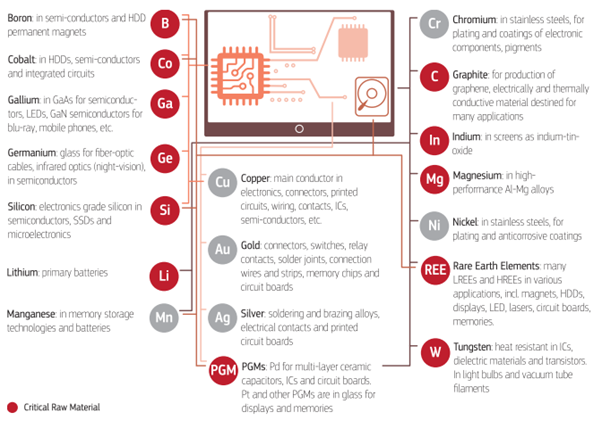
Source: Critical Raw Materials for Strategic Technologies and Sectors in the EU – A Foresight Study – European Commission, 2020 (elaboration on information from Additive Manufacturing – BCG, 2018)
At the moment, just 1% of rare earth element demand is met by e-waste recycling. However, these resources are finite and require substantial environmental disruption to extract, making it all the more important to recover them through recycling.
The impact of e-waste on the environment
It’s worth noting that the environmental impact of e-waste goes beyond landfills. Improper disposal can lead to the release of hazardous substances like lead, mercury, and cadmium into the soil and water, posing significant risks to human health and ecosystems. Additionally, the extraction of precious metals for new electronic devices contributes to habitat destruction, water pollution, and increased greenhouse gas emissions.
By responsibly managing e-waste, MSPs can play a part in reducing these negative impacts and conserving valuable natural resources. Every device retrieved, recycled, or revived is one less piece of e-waste contributing to the growing environmental crisis.
The three Rs for MSPs: retrieve, recycle, and revive
1.Retrieve: getting old IT assets back into circulation
The first step in reducing e-waste is retrieving unused or outdated IT assets. For MSPs, this means conducting regular audits of their inventory and identifying equipment that is no longer in use but still has value. This process should include:
Inventory audits: Regularly assess your storage and server rooms for old equipment that’s been replaced but not disposed of. Create a catalog of all unused assets.
Client returns: Encourage clients to return outdated equipment. Many MSPs lease or manage IT assets for their clients, which can lead to a significant number of unused devices.
2.Revive: extending the lifespan of IT assets
Not all old hardware is destined for the scrap heap. Many devices can be refurbished or repurposed, giving them a new lease on life. This is where MSPs can play a key role in reducing e-waste while also finding cost-effective solutions for their clients.
Refurbish and redeploy: Many older servers and devices can be refurbished and redeployed either internally or for clients who don’t require the latest technology. This can very often be a cost-effective solution for small and medium businesses.
Circular IT solutions: Consider incorporating circular IT solutions into your offerings. This means using a mix of new and refurbished (or entirely refurbished) equipment to meet your clients’ (or your) needs while minimizing environmental impact.
Resale opportunities: There’s a thriving market for refurbished IT equipment. Selling off refurbished devices can provide additional revenue streams for MSPs while reducing e-waste.
Donation programs: Devices that are no longer useful for your operations might still be valuable to educational institutions or nonprofits. Consider donating functional equipment to extend its life.
3.Recycle: responsible disposal of e-waste
Once you’ve retrieved and revived old equipment that can still be of use, the next step is to ensure that the ones you have no use for are disposed of responsibly. Recycling is not just about shredding old devices; it’s about properly dismantling and processing components to recover valuable materials and prevent toxic substances from harming the environment.
Partner with certified e-waste recyclers: Choose a recycling partner that is certified and follows best practices for e-waste disposal. Look for certifications like R2 (Responsible Recycling) or e-Stewards to ensure compliance with environmental standards.
Data destruction: Before recycling, make sure all data is securely erased from devices. This protects your business and clients from potential data breaches.
Recover valuable materials: Some recyclers offer to share the profits from recovered materials, adding a financial incentive to responsible disposal.
Making the case for sustainable IT practices
For MSPs, adopting sustainable IT practices isn’t just about being environmentally responsible—it’s also a strategic business move. Clients are increasingly looking to partner with businesses that share their commitment to sustainability. By promoting your efforts to reduce e-waste through retrieval, recycling, and reviving old assets, you can differentiate your services and attract clients who value green practices.
Moreover, many countries are tightening regulations around e-waste management, making it essential for MSPs to stay ahead of the curve. Being proactive about it not only ensures compliance but also positions your business as a leader in sustainable IT management.
Conclusion
Since Sustainability Day is today, it’s a reminder for everyone, including MSPs, to aim for better practices. By retrieving unused IT assets, recycling responsibly, and reviving old equipment, MSPs can significantly reduce their environmental footprint. It’s not just about keeping old devices out of landfills—it’s about recovering valuable resources, supporting sustainability goals, and even discovering new business opportunities in the process. We are not a recycling company, but we work with our trusted partners.
With almost 20 years of experience in the field, we are experts at circular IT & sustainability, so we can always accompany you every step of the way; feel free to reach out with any question or request you may have, and let’s all be more sustainable together!
recent posts
-
 démystifier l’IT circulaire : libérer la vraie valeur pour votre business
 -
 CloudFest 2026 – Epic throws, fast builds, and a touch of magic
 -
 ¿Ya has visto las últimas cotizaciones de memorias RAM? Calma, tenemos que hablar.
 -
Have you seen the latest RAM quotes? (don’t panic, we need to talk)
-
Avez-vous reçu un devis pour de la RAM récemment ? (ne paniquez pas, il faut qu’on parle)